2026 Best Furniture Plywood for Global Buyers?
For global buyers, choosing the best furniture plywood in 2026 requires more than comparing price and thickness. The panel must perform beside warm lighting, polished hardware, and daily handling. A weak core may reveal itself through edge gaps, screw withdrawal, or bubbling veneer.
The FAO FAOSTAT Forestry Production and Trade database provides valuable data on plywood production, exports, imports, and apparent consumption. Its records help buyers identify major supply regions and changing trade patterns. The UNECE/FAO Forest Products Annual Market Review also tracks timber-market pressures, including energy costs, housing demand, and raw-material availability. These factors can influence furniture plywood pricing and lead times.
Wood scientist Robert H. Falk of the USDA Forest Products Laboratory has said, “Wood is a natural material, and it has inherent variability.” That sentence deserves attention. Even a carefully graded panel can respond differently to moisture, machining, and storage conditions. No panel is perfect.
Reliable sourcing therefore requires more than a catalog image. Buyers should verify veneer species, core construction, formaldehyde emissions, moisture resistance, thickness tolerance, and test documentation. FSC certification may support responsible sourcing, while CARB Phase 2, TSCA Title VI, or EN 13986 documentation may matter for specific markets. Requirements differ by destination.
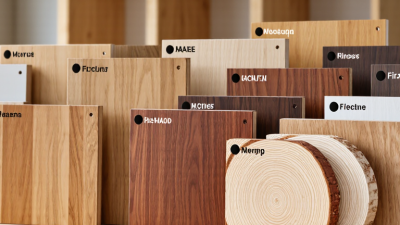
This guide compares practical options for furniture plywood, including birch, poplar, hardwood, and decorative-faced panels. It considers strength, surface quality, machinability, consistency, environmental credentials, and total landed cost. The cheapest sheet may become the most expensive after rework, rejects, and delayed delivery.

What Is Furniture Plywood and Why Does It Matter in 2026?
What Is Furniture Plywood and Why Does It Matter in 2026?
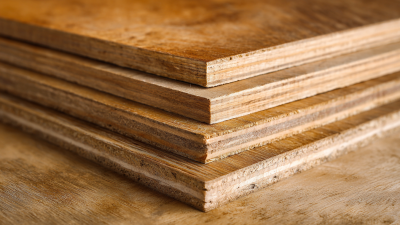
Furniture plywood is an engineered wood panel made from thin veneers bonded in alternating directions. This cross-laminated structure gives it better stability than many solid wood boards. It also resists splitting during drilling, routing, and screw installation. That detail matters.
In practical furniture production, plywood supports cabinets, wardrobes, tables, drawer parts, and curved components. Its performance depends on veneer quality, core gaps, adhesive selection, and thickness accuracy. A smooth face may look excellent, but hidden voids can weaken hinges or create rough cut edges. Not always visible.
In 2026, global buyers are paying closer attention to low-emission adhesives, responsible timber sourcing, moisture resistance, and traceable documentation. These factors affect indoor air quality, product durability, shipping confidence, and market acceptance. Buyers should request recent test reports, grading details, moisture data, and production samples before placing large orders. Requirements can differ between regions, so one certificate may not answer every question.
A reliable evaluation also includes real workshop testing. Cut a sample, inspect its layers, drive screws near the edge, and expose another piece to changing humidity. A panel that performs well in a showroom may behave differently in a busy factory. Even experienced buyers can overvalue appearance and underestimate core construction. Furniture plywood matters because its internal quality eventually becomes visible through movement, failure, or long service life.
How to Compare Furniture Plywood Grades, Cores, and Surface Quality
2026 Best Furniture Plywood for Global Buyers?
How to Compare Furniture Plywood Grades, Cores, and Surface Quality
The best furniture plywood depends on its application, not only its stated grade. Furniture-grade panels should have stable dimensions, clean faces, and reliable bonding. Ask suppliers for grading standards, thickness tolerance, moisture content, and test documents. Grade names can vary between markets. Do not trust labels alone. A panel marked “premium” may still show patches, open knots, or uneven sanding.
Core construction affects strength, weight, and machining performance. Multi-ply hardwood cores often provide better screw holding and edge stability. Lighter cores may reduce shipping weight, but they can contain more voids. Inspect cut edges under bright light. Look for gaps, overlaps, and loose inserts. Surface quality also matters. A smooth face reduces veneer preparation and finishing work. Check for color variation, shallow dents, glue marks, and repaired areas. Request full-size samples when possible. Small samples can hide defects. In our experience, a panel may look excellent at first, yet reveal core gaps after cutting. That mistake is costly.
Tips: Compare at least three samples using the same checklist. Record thickness, weight, surface defects, and bending behavior. Use a moisture meter before installation. For cabinets, test screw holding near edges. Confirm emission documentation for the destination market. If results conflict, pause the order and request independent testing. A practical warning: factory photos are not enough. I have sometimes judged quality too quickly, and later noticed sanding waves under strong lighting.
How to Evaluate Global Suppliers, Certifications, and Product Standards
2026 Best Furniture Plywood for Global Buyers?
Global buyers should evaluate plywood beyond surface appearance and price. Start with the supplier’s factory records, not a polished brochure. Request veneer species, core structure, adhesive type, moisture content, and batch traceability. A reliable supplier can show production dates, laboratory results, and pallet-level identification. The FAO Global Forest Resources Assessment 2020 reported that forests covered about 4.06 billion hectares worldwide. Responsible sourcing therefore deserves serious attention. Ask for chain-of-custody evidence and verify its scope, expiry date, and certificate holder.
Product standards must match the furniture application and destination market. Check panel thickness tolerance, bonding strength, bending performance, and formaldehyde emissions. EN 636 classifies plywood by moisture conditions, while EN 717-1 measures formaldehyde release through chamber testing. ISO 12465 also provides plywood quality requirements. Do not accept one general “export grade” claim. It is too vague. Independent testing should identify the tested thickness, adhesive system, and production batch. The OECD Due Diligence Guidance also supports risk-based supplier checks, especially for complex international supply chains.
Certification helps, but it is not a substitute for inspection. I would compare three recent test reports and inspect edge gaps, patch repairs, and warping under warehouse lighting. Small defects become visible after CNC cutting. The UNECE/FAO Forest Products Annual Market Review shows how strongly wood-product trade depends on changing regional demand and standards. That makes consistency more valuable than a single low quotation. One weakness remains: laboratory results may not represent every shipment. Buyers should reserve samples, define rejection limits, and review performance after installation.