Blog

China Top 10 Finished Plywood Manufacturers for Global Buyers

Choosing the right finished plywood manufacturer requires more than comparing prices on a supplier list. Global buyers must examine core construction, veneer quality, surface consistency, adhesive performance, and factory discipline. A polished face can hide weak bonding. That risk matters.

This guide introduces China’s top 10 finished plywood manufacturers for international buyers. It focuses on production experience, export capability, quality controls, customization, certifications, and communication reliability. You will see practical details, including panel thickness, surface grades, moisture resistance, packaging methods, and container loading practices. These details affect installation results, freight damage, and long-term performance.

Dr. Qinglin Wu, a recognized wood-composite researcher, has stated, “Performance matters more than appearance in wood composites.” That principle applies directly to finished plywood. Buyers should inspect more than a smooth surface. Ask for veneer specifications, formaldehyde test reports, bonding grades, and recent production samples. Confirm whether the sample represents normal output or a carefully selected panel.

The manufacturers discussed here serve furniture, interior, construction, and commercial-project markets. Some may excel at stable volume. Others may offer stronger customization or faster development support. No supplier is perfect. Factory claims still require verification.

Request clear documentation. Compare like with like. A low quotation may reflect thinner veneers, weaker cores, or limited inspection. A higher price may include better grading and safer packaging. This article offers a practical starting point, not a substitute for independent testing. Your project conditions, destination climate, and compliance requirements should guide the final decision.
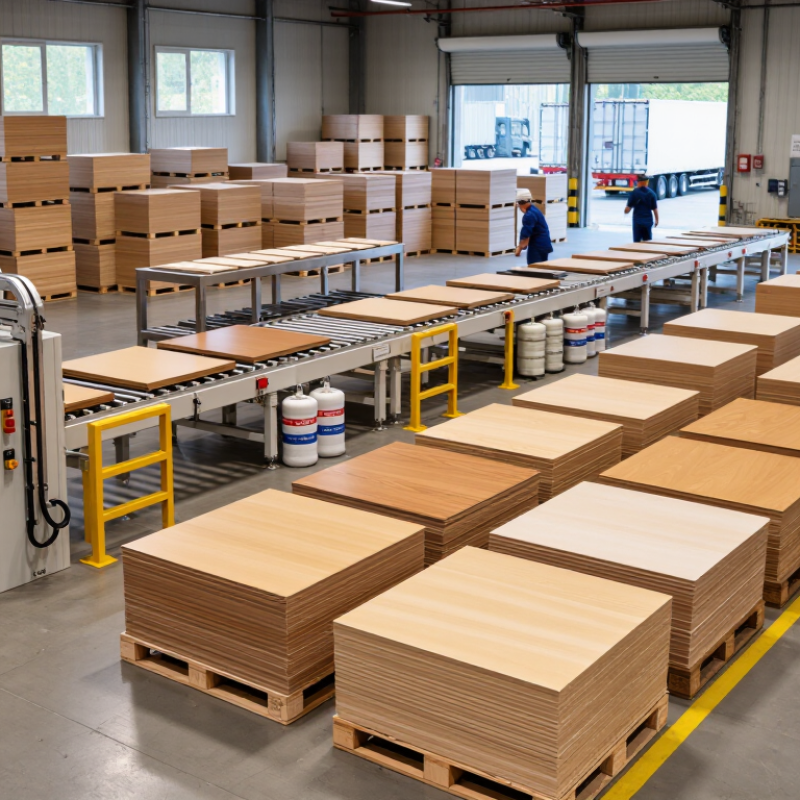
China Top 10 Finished Plywood Manufacturers for Global Buyers

What Finished Plywood Is and Why Global Buyers Choose It

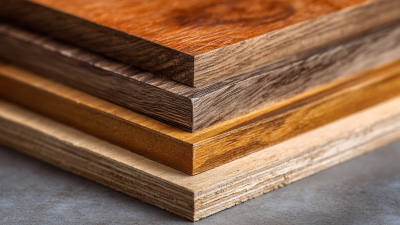
Finished plywood is plywood prepared for direct use after leaving the factory. Its face may be sanded, coated, stained, laminated, or sealed, depending on the project. The surface feels smoother and looks more uniform than unfinished panels. Cabinet doors, wall panels, furniture parts, and interior fittings commonly use it. Some panels still need edge treatment or final cutting.

Global buyers choose finished plywood because it can reduce labor at the destination. A contractor may receive panels with consistent thickness, cleaner faces, and fewer surface repairs. This can shorten installation time and improve visual consistency across a large project. Pre-finished surfaces also reduce dust from repeated sanding. Less site work matters when schedules are tight.

Not every finished panel performs equally. An attractive surface can hide weak bonding or uneven core layers. Experienced buyers should request samples, moisture data, emission test reports, and production specifications. Check the panel under angled light. Small ripples become obvious there. Inspect edges after cutting, too. A supplier should explain coating thickness, curing conditions, tolerances, and packaging methods. Samples can still differ from mass production, which is an uncomfortable but important possibility. I would not approve a container from photographs alone. Local climate, transport humidity, and end-use conditions may require different panel grades. “Ready to use” is helpful, but it is not a guarantee of perfect performance.
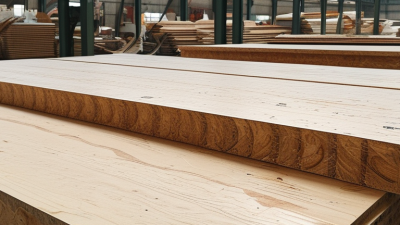
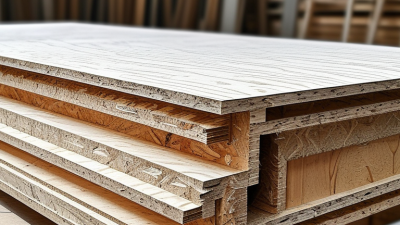
How to Evaluate China’s Top Finished Plywood Manufacturers

Choosing among China’s top finished plywood manufacturers requires more than comparing online prices. A reliable evaluation begins with the product itself. Request samples with the same thickness, core species, face grade, edge finish, and coating as your project. Measure thickness at several points. Check flatness, sanding marks, veneer joints, color consistency, and corner protection. Small defects often become expensive during installation.

Ask for a factory audit, not only a showroom tour. Review production records, moisture-control methods, adhesive testing, pressing temperatures, and batch traceability. Confirm whether the manufacturer can provide current test reports for formaldehyde emissions, strength, fire performance, or other required properties. Reports should match the exact panel construction. A generic certificate proves little. Inspect packaging too. Moisture barriers, pallet strength, labels, and loading photographs reveal practical discipline. Speak with quality staff, not only sales representatives. Their answers should be specific and repeatable.

Export experience matters, but it is not a guarantee. Compare response times, sample revisions, inspection procedures, and how problems are documented. A written specification should define tolerances, acceptable repairs, finish sheen, packing standards, and approval steps. Start with a controlled trial order when possible. It exposes weaknesses before a full shipment. One polished sample can mislead. I would still recheck every assumption after production begins. Cost deserves attention, but stable quality and honest communication usually protect the budget better.

China Top 10 Finished Plywood Manufacturers for Global Buyers - How to Evaluate China’s Top Finished Plywood Manufacturers

Anonymous, non-branded evaluation framework based on internationally recognized plywood, emissions, quality-control, and export-compliance requirements.

Rank Evaluation Dimension Reliable Benchmark or Requirement Evidence Global Buyers Should Request Why It Matters
1 Applicable Product Standard The manufacturer should identify the applicable standard, such as EN 636 for plywood use conditions, EN 314-2 for bonding quality, ASTM product specifications, or relevant national standards. Current product specification, standard number, test method, and third-party laboratory report. A clear standard prevents confusion between interior, humid-condition, and exterior-grade plywood.
2 Bonding and Water Resistance EN 314-2 classifies plywood bonding as Class 1 for dry conditions, Class 2 for humid conditions, and Class 3 for exterior conditions. Bonding-class report, glue technical data sheet, hot-water or boiling-water test results where applicable. Bond quality affects delamination risk during storage, transportation, installation, and service.
3 Formaldehyde Emissions Under China’s GB/T 39600-2021 classification, E1 is up to 0.124 mg/m³, E0 is up to 0.050 mg/m³, and ENF is up to 0.025 mg/m³ under the specified test conditions. Recent chamber-test report showing the test method, sample identity, production date, and emission result. Emission performance can affect legal market access, indoor-air compliance, and project approvals.
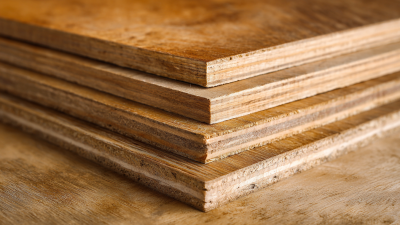
4 Panel Construction and Core Quality A commercial specification should state face and back veneer grade, core species, number of plies, cross-banding structure, nominal thickness, and permitted thickness tolerance. Approved sample, cross-section photographs, veneer-grade schedule, and pre-shipment inspection report. Core gaps, overlaps, loose knots, and uneven lay-up can reduce strength and machining quality.
5 Dimensional Accuracy Common international panel formats include approximately 1,220 × 2,440 mm and 1,250 × 2,500 mm, while thickness and tolerance must be agreed in the purchase specification. Dimensional inspection records covering length, width, thickness, squareness, flatness, and moisture content. Consistent dimensions reduce cutting waste, installation problems, and claims at the destination.
6 Mechanical Performance The required properties may include bending strength, modulus of elasticity, screw-holding performance, surface hardness, and face or core visual quality, depending on the end use. Laboratory test report linked to the exact product construction and production batch. Structural, furniture, flooring, packaging, and decorative applications require different performance profiles.
7 Surface Finish and Machining Finished plywood may require calibrated sanding, smooth faces, film facing, overlay paper, edge sealing, CNC compatibility, or cut-to-size processing. Surface-grade definitions, gloss or texture specification, sample approval, and machining tolerance sheet. A precise finish improves coating adhesion, appearance, assembly efficiency, and downstream processing.
8 Traceability and Quality Control A dependable production system should trace raw materials, adhesive batches, pressing parameters, inspection results, and finished-goods lots. Quality manual, batch coding method, inspection plan, corrective-action records, and calibration certificates. Traceability makes it easier to investigate defects and maintain consistent quality across repeat orders.
9 Responsible Timber Sourcing For projects requiring certified materials, buyers should verify a valid FSC chain-of-custody certificate and confirm that the certificate scope covers the ordered plywood products. Certificate number, certificate scope, validity status, product group, and transaction documentation. Verified sourcing supports legality, sustainability claims, and customer or regulatory requirements.
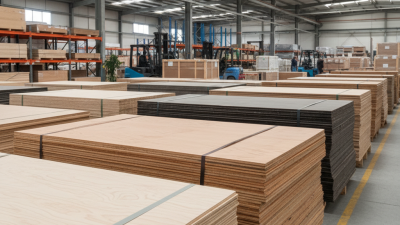
10 Export Packaging and Shipment Control Export orders should define pallet construction, moisture protection, corner protection, container loading, shipping marks, and inspection responsibility. Solid-wood packaging used internationally may need ISPM 15 treatment and marking. Packing specification, container-loading photographs, carton or pallet count, commercial documents, and pre-shipment inspection report. Proper packing reduces edge damage, moisture exposure, quantity discrepancies, and customs delays.

Buyer note: Product claims should be verified against current certificates and test reports for the exact plywood construction, production batch, destination market, and intended application.

China’s Top 10 Finished Plywood Manufacturers by Product Strength

China’s top 10 finished plywood manufacturers stand out through product strength, not just factory size. Their strongest ranges usually include furniture-grade plywood, film-faced panels, decorative surfaces, and moisture-resistant boards. Buyers should examine core quality, veneer thickness, glue performance, sanding accuracy, and edge stability. These details affect cabinet doors, wall panels, flooring, and transport packaging.

Experienced manufacturers often control more production stages in-house. This can improve thickness consistency, surface smoothness, and batch repeatability. Some suppliers offer calibrated panels with clean edges and stable dimensions. Others focus on customized finishes, such as natural wood textures, matte coatings, or fire-rated surfaces. However, product claims still need verification. A polished sample may not represent every shipment. Independent testing and recent production records provide stronger evidence than brochures.

Tips: Request samples from different batches. Check warping after storage. Measure thickness at several points. Ask for formal test reports, adhesive information, and tolerances. Confirm whether the finished surface can withstand cutting, drilling, humidity, and daily cleaning. Do not judge quality by appearance alone. I have seen attractive panels fail at the edges because the core contained uneven gaps. That weakness is easy to miss during a quick inspection. Also, supplier rankings can change when capacity, materials, or quality control shifts. Comparing current data remains necessary.

China’s Top 10 Finished Plywood Manufacturers by Product Strength

Typical nominal plywood thicknesses commonly specified for strength-related applications by global buyers.

Thickness is a practical procurement indicator, not a direct strength rating. Actual performance also depends on wood species, adhesive type, panel grade, moisture resistance, veneer quality, and certified engineering values.

Key Quality, Certification, and Customization Factors to Compare

When comparing China’s top 10 finished plywood manufacturers, global buyers should examine more than surface appearance. A smooth panel can hide core gaps, uneven veneer thickness, or weak bonding. Request production samples from recent batches, not only showroom pieces. Check thickness tolerance, moisture content, surface flatness, and edge quality. For interior panels, moisture commonly stays near 8–14%, depending on the destination climate. Ask for laboratory reports covering formaldehyde emissions, bonding strength, and water resistance.

Certification needs careful verification. Confirm the certificate number, issuing body, product scope, and expiration date. Standards such as CARB Phase 2, E1, EN 13986, or FSC may apply differently across markets. A factory holding one certificate may not cover every thickness, finish, or production line. Factory audits, batch traceability, and independent pre-shipment inspections offer stronger evidence than a scanned document. Still, paperwork can become outdated.

Customization should be measured in practical details. Discuss panel sizes, core species, veneer grade, paint color, gloss level, edge sealing, carton strength, and pallet limits. Ask whether the manufacturer can control color variation across repeat orders. Trial production is useful, but one small batch may not reveal seasonal changes or labor differences. That is an uncomfortable risk. Confirm tolerances in writing, approve a golden sample, and inspect random cartons before loading. Good communication matters, but clear records matter more.

How Global Buyers Can Select and Purchase from the Right Supplier

Global buyers comparing China’s top 10 finished plywood manufacturers should begin with evidence, not ranking lists. FAO’s Forestry Production and Trade database places global wood-based panel production at roughly 400 million cubic metres annually. That scale creates choice, but also inconsistency. Request recent mill photographs, production capacity, core species, glue type, and panel tolerance records. A polished sample can hide weak bonding.

Ask for third-party test reports covering bending strength, moisture resistance, formaldehyde emissions, and dimensional stability. The relevant limits depend on your destination market. ISO 12465 provides plywood performance guidance, while EN 13986 supports construction-panel assessment in Europe. Check whether reports match the exact thickness, face grade, and adhesive shown on your purchase order. They often do not. This is where buyers can make expensive assumptions.

Purchase a small trial shipment before signing a large contract. Inspect edge sealing, veneer overlap, surface repairs, and pallet protection when the cargo arrives. Record moisture readings from several bundles, not just one convenient sheet. FAO trade data also shows how strongly wood-product commerce depends on international logistics, so confirm packing, container loading, lead time, and replacement procedures in writing. A supplier offering the lowest unit price may create higher cutting waste. I have seen buyers focus on appearance and overlook core gaps. That mistake deserves a second review. Ask for legal timber documentation and traceability records, especially when importing into markets with stricter due-diligence rules.