Why Choose a Drawer Beside Bed for Smart Storage?
Bedrooms are becoming more compact, while daily routines demand easier access to essentials. The 2024 U.S. Houzz Bathroom Trends Study reports that homeowners continue to prioritize functional storage during renovations. Although the study focuses on bathrooms, its message applies to bedrooms: visible clutter often reveals weak storage planning. A Drawer Beside Bed offers a practical response. It places glasses, medication, charging cables, and books within arm’s reach. No searching in the dark.
The IKEA Life at Home Report 2023 also highlights how people connect home comfort with order, privacy, and personal control. A bedside drawer supports these needs through small, dedicated compartments. Its enclosed design can protect surfaces from dust and reduce visual noise. Soft-close runners, full-extension slides, and rounded edges add professional value. These details matter when the drawer opens repeatedly at night. Good furniture should feel quiet.
However, a Drawer Beside Bed is not automatically smart storage. A narrow drawer may become a cable graveyard. A deep drawer can hide forgotten items. Research from the National Association of Home Builders, including its What Home Buyers Really Want reports, consistently shows strong consumer interest in storage and functional room layouts. Yet demand alone does not guarantee good design. Interior dimensions, bedside clearance, lighting, and user habits must work together. Measure first. Choose restraint. This approach makes the drawer useful rather than decorative, supporting calmer mornings and safer nighttime movement. The idea remains simple, but its success depends on thoughtful execution and honest review.
What Is a Bedside Drawer and How Does It Support Smart Storage?
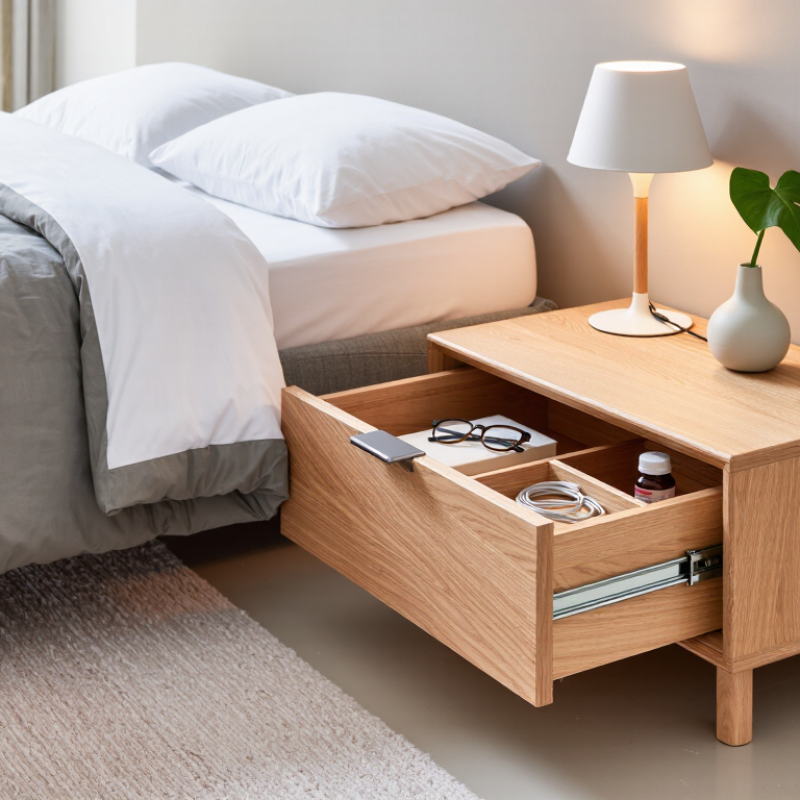
A bedside drawer is a compact storage unit placed beside the bed. It keeps nighttime essentials within arm’s reach. Think of reading glasses, medication, a charging cable, or a water bottle. Unlike an open table, its drawer hides visual clutter and protects small items from dust. The design is simple, but the daily effect can be significant.
Smart storage means assigning each item a clear location. A shallow top drawer can hold glasses and a sleep mask. A deeper drawer can store books, cables, or personal care items. Choose smooth runners, rounded edges, and a height close to the mattress. These details reduce awkward reaching, especially in dim light. The National Association of Home Builders’ 2024 What Home Buyers Really Want report shows strong demand for dedicated storage, with 86% of buyers rating a laundry room desirable and 85% favoring a walk-in pantry. The message is clear. People value order.
However, a drawer beside the bed is not automatically smart. Oversized units can narrow walking space. Poor ventilation may trap heat around charging devices. A cluttered top surface also defeats the purpose. Measure the bedside gap before buying, and leave enough room for comfortable movement. The result may feel less dramatic than a full bedroom makeover. It is often more useful. I still question whether every item needs a drawer; sometimes, one open shelf works better.
Why Choose a Drawer Beside the Bed for Smart Storage?
A bedside drawer keeps frequently used items organized, protected from dust, and within easy reach. The chart shows practical minimum internal drawer depths for common bedside items.
How it supports smart storage: A drawer with approximately 25–27 cm of usable depth can accommodate larger items such as tablets and water bottles, while smaller compartments can keep phones, glasses, chargers, and books separated and easy to find.
Why Does Bedside Placement Improve Accessibility and Space Efficiency?
A drawer beside the bed improves accessibility because everyday items stay within arm’s reach. You can reach reading glasses, water, medication, or a phone without crossing the room. This small distance matters at night, especially when movement feels awkward or visibility is poor. In practical bedroom planning, keeping essentials near the sleeping area also reduces clutter on the floor. Fewer objects underfoot can make nighttime movement more predictable.
Space efficiency is another clear advantage. A narrow bedside drawer uses vertical storage instead of spreading items across a wide surface. Choose a unit that leaves enough clearance for walking and opening the drawer fully. Measure the gap first. A few centimeters can change daily comfort. The drawer should also match the bed height, so the handle remains easy to see and use. Stable construction matters because a drawer that shifts can become frustrating or unsafe.
Not every bedside drawer works well. Deep drawers may hide small items, while shallow drawers can become crowded quickly. I have found that labeled sections help, although they can feel overly organized for some people. Personal habits should guide the layout. Soft-close runners reduce noise, but they may cost more and still require occasional cleaning. A simple drawer, carefully positioned, often serves better than a larger unit that blocks movement. Admittedly, bedside storage can encourage keeping too many things close. Regularly checking its contents keeps the space useful.
Which Items Are Best Stored in a Drawer Beside the Bed?
A drawer beside the bed works best when it holds items used during quiet nighttime routines. In my experience, reading glasses, a small journal, and a pen belong near the top. They remain easy to reach without turning on bright lights. A sleep mask, earplugs, and tissues also fit neatly in shallow compartments. Keep them visible through simple dividers.
Small personal-care items are practical choices. Hand cream, lip balm, a comb, and spare hair ties prevent late-night searching. A charging cable can stay inside, but it should not be tightly bent. Store approved medicines only in their original packaging, and keep them away from children.
If a medicine needs special temperature control, the bedside drawer may be unsuitable. Check its storage instructions.
Some objects need more caution. Water can leak and damage paper, electronics, or wooden surfaces, so place it on a stable table instead. Valuable jewelry may be better in a secure location, especially in shared rooms. I once filled a drawer with too many “useful” items and could not find my glasses quickly. That defeated the purpose. Keep it simple. Not everything belongs there. A weekly reset helps remove receipts, empty packaging, and forgotten cables before clutter becomes a habit.
How Should Bedside Drawers Be Organized for Daily Convenience?
A drawer beside the bed works best when every item has a clear reason to stay there. In my experience, daily use becomes easier when the top drawer holds small essentials. Keep reading glasses, hand cream, tissues, and a charging cable within reach. Use a shallow tray to prevent items from sliding into corners. It sounds simple. It helps.
The second drawer can hold less-used personal items, such as spare cables, sleep masks, or a notebook. Group similar objects in small fabric boxes or dividers. Leave some empty space. An overfilled drawer hides what you need and encourages unnecessary searching. I measure storage by retrieval time, not capacity. If an item takes too long to find, its location needs review. Coil cords loosely and label unfamiliar chargers. Avoid tight bends that may damage them.
Store medicines only according to their instructions and away from children or moisture. Otherwise, choose a separate, suitable location. Heavy objects belong in lower drawers, especially in lightweight bedside furniture. Check that the drawer opens smoothly and does not block walking space. I once kept a notebook beneath spare linens, then stopped using it because reaching it felt inconvenient. That mistake taught me to organize for real habits, not an imagined routine. Reassess the drawer every few weeks. Needs change, and a perfect layout rarely stays perfect.
Why Choose a Drawer Beside Bed for Smart Storage? — How Should Bedside Drawers Be Organized for Daily Convenience? | Drawer Zone | Typical Usable Size
(W × D × H) | Approximate Capacity | Best Items to Store | Recommended Organizer | Access Priority | Daily Convenience Benefit |
Top Drawer
Immediate-reach essentials | 45 × 35 × 8 cm | About 12.6 L | Reading glasses, tissues, sleep mask, hand cream, small notebook, medication used at night, and a charging cable. | One shallow divided tray with compartments about 8–12 cm wide. | Very high | Keeps frequently used items visible, separated, and reachable without leaving the bed. |
Second Drawer
Technology and personal care | 45 × 35 × 12 cm | About 18.9 L | Tablet, e-reader, headphones, spare cables, compact remote controls, sleep accessories, and grooming items. | Removable bins or cable compartments; reserve one section for electronics and one for personal care. | High | Prevents cables and small devices from mixing with soft goods or becoming tangled. |
Third Drawer
Textiles and backup supplies | 45 × 35 × 18 cm | About 28.4 L | Spare pillowcases, sleepwear, eye masks, seasonal accessories, books, and replacement household supplies. | Foldable fabric boxes or vertical file-style dividers to keep textiles upright. | Medium | Uses deeper storage for bulky items while keeping the top drawers uncluttered. |
Safety Section
Items requiring controlled access | At least 8–12 cm clear height | Depends on drawer size | Documents, spare keys, small valuables, or items that should not be accessible to children. | Small lidded container or a lockable internal box placed toward the rear of the drawer. | Low frequency | Separates sensitive belongings from everyday items and reduces accidental access. |
Open Charging Area
Optional cable-management zone | 10–15 cm wide
6–10 cm high | Varies by design | Phone or e-reader charging, provided the furniture is designed for safe cable routing and ventilation. | Cable clip, rear cable opening, and a non-slip charging mat; avoid covering ventilation openings. | High | Provides a consistent place for devices while reducing visible cable clutter beside the bed. |
Planning note: The dimensions and capacities are practical planning examples calculated from usable internal space. Actual capacity will vary with drawer hardware, wall thickness, runners, and interior clearances. Keep the top drawer limited to items used several times per week, and review the contents monthly to prevent bedside clutter.
What Features Make a Bedside Drawer Safe, Durable, and Practical?
Why Choose a Drawer Beside Bed for Smart Storage?
A bedside drawer keeps glasses, medicines, and charging cables within reach. However, safe design matters more than appearance. Look for rounded corners, smooth runners, and a drawer stop that prevents sudden removal. A stable, wide base reduces tipping when the drawer is fully open. The U.S. Consumer Product Safety Commission estimated about 15,300 furniture tip-over injuries among children under six from 2018 to 2020. A small bedside unit still deserves serious attention.
Durability comes from more than thick panels. Check reinforced joints, tested drawer hardware, and surfaces that resist moisture from cups or humidifiers. Standards such as EN 14749 address safety for domestic storage furniture, including stability and strength. Practical details matter too: a quiet soft-close runner, easy-clean coating, and enough depth for everyday items. In real use, I have found that oversized drawers often become cluttered and harder to open safely. Smaller compartments can work better, though this depends on the user.
Tips: Anchor taller units when possible, especially in homes with children or pets. Keep heavy objects low. Test the drawer with one hand before buying. If it wobbles on a flat floor, reject it. Measure the gap beside the bed carefully; a beautiful drawer that blocks walking space is not practical. Check hardware after several weeks, because early loosening can reveal weak construction.