
Selecting Wholesale Bags For Chemicals requires more than comparing price, size, or printed specifications. Chemical powders can react to moisture, static electricity, heat, and handling pressure. A suitable flexible intermediate bulk container (FIBC) must match the product’s density, flow behavior, filling method, and discharge system. ISO 21898:2024 provides requirements for FIBCs, including design, testing, and safe performance. These details matter when a one-ton bag moves through a warehouse, forklift, or container terminal.
Industry data also shows why this decision deserves careful review. The United Nations Conference on Trade and Development reported that global maritime trade exceeded 12 billion tonnes in 2023, increasing pressure on packaging durability and transport efficiency. Meanwhile, the International Organization for Standardization identifies testing factors such as lifting strength, toppling, and drop resistance. These tests are not decorative paperwork. They reflect real handling risks, especially when bags hold dense powders with sharp particles.
The best bag depends on the chemical, not the supplier’s marketing language. Conductive or antistatic fabric may suit sensitive environments, while coated polypropylene can improve moisture protection. Liner selection is equally important. A polyethylene liner may reduce contamination, but it can complicate discharge and grounding. That trade-off is easy to overlook. Buyers should request test certificates, UN performance data where applicable, batch traceability, and clear storage guidance. No single design fits every chemical. A practical trial with the actual material remains the most reliable step, even when laboratory data looks convincing.
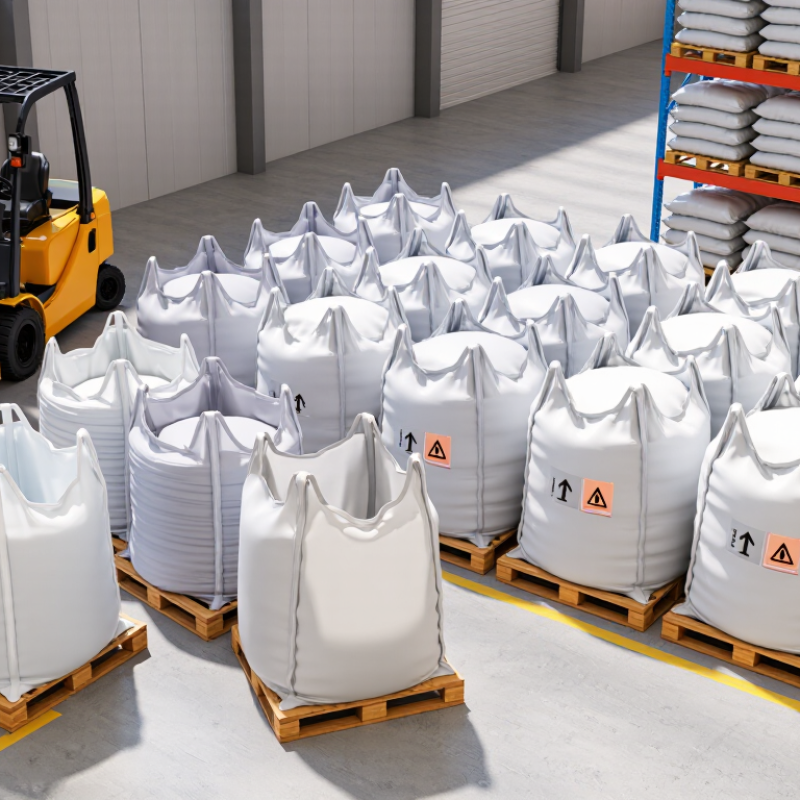
Chemical compatibility is the first filter when selecting wholesale bags for chemicals. A strong outer layer cannot fix an incompatible liner. ASTM D543 evaluates plastic resistance against chemical reagents, but suppliers should test the exact formulation, concentration, temperature, and contact time. Real storage conditions matter.
Polyethylene liners often suit many aqueous solutions, salts, and mild chemicals. However, strong oxidizers, aromatic solvents, and concentrated acids may require different materials. Check permeation, swelling, brittleness, seal strength, and static control. UN Recommendations on the Transport of Dangerous Goods require performance testing for applicable packaging, including drop, stacking, and leakproofness tests. A bag can look intact and still fail chemically.
Demand is not slowing. The United Nations Environment Programme’s Global Chemicals Outlook II projects chemical production could double by 2030. CEFIC’s 2023 Facts and Figures report recorded European chemical sales of about €648 billion in 2022. That scale increases the need for documented bag specifications, traceable production batches, and trained handling teams. Select bags with clear chemical-resistance data, safety data sheet reviews, and independent test records. Do not rely only on a generic “chemical grade” claim. It sounds reassuring, but it is incomplete. A practical gap remains: many purchasing teams compare price before verifying compatibility. Bulk savings become expensive after one swollen liner, contaminated pallet, or failed seal.

The best wholesale chemical bag depends on the material inside, not only the purchase price. Woven polypropylene suits many dry powders, granules, and salts. Its strong fabric handles stacking and repeated movement. A polyethylene liner improves moisture resistance. Still, polypropylene alone may not protect moisture-sensitive chemicals.
Low-density polyethylene liners work well with many aqueous solutions and mild powders. Their flexibility helps when bags are filled by hand or machine.
High-density polyethylene offers greater stiffness and puncture resistance. It can suit stronger handling conditions. Compatibility changes with concentration, temperature, and contact time. Never treat one resin as universally safe.
Acids, alkalis, solvents, and oxidizing chemicals require closer review. Fluoropolymer liners may support demanding chemical environments, but they cost more and need correct specifications. Multiwall paper bags can serve dry, non-reactive powders, especially with an inner polyethylene layer. Conductive or antistatic construction may reduce static risks around combustible dust. It is not a substitute for site safety controls.
Check the safety data sheet before selecting a wholesale bag. Compare the chemical name, concentration, temperature, liner thickness, seam design, and filling method. Ask for compatibility data and sample testing.
A small trial can reveal swelling, brittleness, leakage, or weak seams. UN-rated packaging may be necessary for certain transported materials. However, certification does not guarantee compatibility.
One common mistake is choosing a strong outer bag while overlooking the liner. Cost matters, but a failed liner can ruin the entire shipment.
The best wholesale chemical bags match the material, filling process, and storage conditions. Capacity comes first. Common bulk bags handle about 500 to 2,000 kilograms, but the correct choice depends on density and equipment. Never select a bag by volume alone. A powder may appear light, yet create heavy pressure at the seams.
Strength requires more than thick fabric. Check the safe working load, safety factor, lifting loops, and seam construction. Reinforced corners help during forklift movement. A reliable bag should remain stable when filled, lifted, and stacked. In practical inspections, weak stitching is often easier to find than expected. However, rushed handling can still damage a strong bag. That detail deserves attention.
Tips: Request test reports, load ratings, and material specifications before ordering. Choose an inner liner when moisture, dust, or contamination creates a risk. For sensitive chemical powders, examine sift-proof seams, secure closures, and antistatic options. Conductive designs may require proper grounding during filling and discharge. Do not assume every liner suits every chemical. Compatibility testing is essential. UV-resistant fabric helps during outdoor storage, but covered storage remains safer. Add clear handling labels and inspect each shipment for tears, distorted loops, or damp patches. Small defects matter.
The best wholesale chemical bags depend on the material, hazard classification, weight, and handling method. A bag suitable for dry powder may fail with moisture-sensitive granules. Procurement teams should review the Safety Data Sheet before choosing fabric, liner, closure, and discharge design. Polypropylene woven bags, flexible intermediate bulk containers, and multilayer liners can serve different chemical applications. However, material compatibility must be verified through documented testing.
Regulatory compliance requires more than a printed label. For regulated transport, the packaging may need UN performance certification, correct markings, and testing for lifting, stacking, dropping, and leakage. Requirements vary by country and chemical classification.
Some FIBCs also require static-control designs, such as conductive or dissipative construction. Grounding procedures must be clear and followed during filling and discharge. Keep the floor clean. Dust changes the risk.
Safe handling begins before the bag reaches the warehouse. Inspect seams, lifting loops, liners, and closures for damage. Do not reuse a bag unless the manufacturer’s instructions permit it and contamination controls are proven. Store bags away from heat, sunlight, water, and incompatible chemicals. Workers need suitable gloves, eye protection, respiratory controls, and practical training. A low-cost bag can appear efficient, but that assumption is often wrong. Even experienced teams miss small tears or incomplete grounding checks. Regular audits, traceable batch records, and a second-person review make the process more dependable.
What Are the Best Wholesale Bags for Chemicals?
How to Select a Reliable Wholesale Chemical Bag Supplier
Selecting wholesale chemical bags starts with compatibility, not price. Ask the supplier to identify the bag material, liner type, seam construction, and moisture resistance. Polyethylene liners suit many dry powders and granules. Woven polypropylene bags can provide useful strength during stacking and transport. Multiwall paper bags may work for stable, non-moisture-sensitive products. The correct choice depends on the chemical’s properties, density, temperature, and filling method.
Request recent test reports and clear material specifications. A dependable supplier should explain how bags are tested for tensile strength, leakage, drop resistance, and seal performance. For regulated transport, verify that the packaging meets the required testing standards for your destination. Check production traceability too. Batch numbers, inspection records, and a written quality procedure show stronger control than attractive catalog photos.
Order samples before committing to a large purchase. Fill them with a comparable material and inspect the seams after handling, stacking, and vibration. Watch for fine powder near the corners. Small defects matter. Ask about minimum order quantities, lead times, storage conditions, and replacement procedures. Communication is practical evidence of reliability. Still, no supplier is perfect. Sample performance may differ from mass production, so repeat inspections are worth the time. A careful supplier will accept that concern and provide measurable answers.
| Bag Type | Typical Construction | Common Chemical Applications | Typical Capacity | Moisture Protection | Chemical Compatibility | UN Certification Consideration | Reusability | Wholesale Selection Check |
|---|---|---|---|---|---|---|---|---|
| FIBC Bulk Bag | Woven polypropylene body with lifting loops; optional liner and coated fabric | Dry powders, granules, resin, fertilizers, pigments, and non-hazardous mineral chemicals | 500–2,000 kg | Good with a sealed polyethylene liner or coated fabric; standard woven fabric alone is not fully moisture-proof | Good for dry solids Confirm compatibility with the liner and product formulation. | Required when used for regulated dangerous goods; verify the exact UN design, packing group, and testing documentation | Usually single-trip for regulated materials; reusable only when the design, inspection, and cleaning program allow it | Check safe working load, safety factor, discharge design, liner fit, seam strength, and traceability |
| PE Lined Woven Bag | Polypropylene woven outer layer with an inner polyethylene liner | Fine powders, hygroscopic chemicals, salts, detergents, and dry additives | 10–50 kg | High Liner thickness and closure method strongly affect protection. | Broad dry-solid use Test against oxidizers, solvents, and concentrated chemicals before approval. | Use only a certified design when the filled bag is classified as dangerous goods | Generally intended for one-way shipment | Request liner specifications, heat-seal performance, drop-test results, and batch consistency data |
| Multiwall Paper Chemical Sack | Two or more kraft-paper plies, often with a polyethylene film or laminated barrier | Dry powders, cementitious chemicals, mineral powders, and selected industrial additives | 10–25 kg | Moderate to high A polyethylene barrier improves resistance to humidity and dust leakage. | Product-specific Not suitable for all corrosive, wet, or solvent-based chemicals. | Confirm whether the sack design is approved for the intended dangerous-goods classification | Normally single-use | Evaluate burst strength, paper ply quality, valve performance, pallet stability, and dust control |
| HDPE Woven Hazardous-Goods Bag | High-density polyethylene woven fabric with reinforced seams and optional liner | Selected corrosive powders, industrial minerals, fertilizers, and hazardous dry solids | 25–1,000 kg | High with liner | Good for many dry chemicals Compatibility must be verified using concentration, temperature, and exposure-time data. | Look for a valid UN specification marking and test report matching the intended contents | Usually single-trip for dangerous goods | Verify material identification, seam integrity, closure system, drop testing, and certificate validity |
| Conductive or Antistatic FIBC | Woven polypropylene with conductive yarns or antistatic construction | Flammable powders, combustible dusts, and chemicals handled in potentially explosive atmospheres | 500–2,000 kg | Depends on fabric coating and liner; a conductive liner may be required | Depends on liner | UN approval does not replace electrical safety assessment or correct grounding procedures | Typically controlled single-trip use for hazardous materials | Confirm FIBC type, grounding requirements, surface resistance, ignition-risk assessment, and operator procedures |
| Flexible Intermediate Bulk Container with Form-Fit Liner | FIBC outer body with a shaped polyethylene liner designed to reduce residual product | Fine powders, moisture-sensitive chemicals, pharmaceuticals, and high-purity industrial materials | 500–1,500 kg | Very high Reduced folds can improve emptying and minimize product retention. | Suitable for many dry powders Request a written compatibility assessment for aggressive chemicals. | Certification must cover the complete bag-and-liner configuration, not only the outer body | Usually single-use unless specifically designed and approved otherwise | Check liner dimensional accuracy, filling and discharge fit, cleanliness controls, and product recovery rate |
| Small Plastic Chemical Sack | Polyethylene or polypropylene film, optionally laminated or co-extruded | Small-volume powders, pellets, laboratory materials, and secondary packaging | 1–25 kg | Moderate to high Film thickness and seal quality determine leakage resistance. | Limited by film type Do not assume general-purpose polyethylene is compatible with every chemical. | Required when the package is used as approved dangerous-goods packaging | Normally single-use | Review film thickness, tensile strength, seal integrity, puncture resistance, and closure quality |
| Fluoropolymer-Lined Bag | Industrial outer bag combined with a fluoropolymer film or lining for demanding chemical service | Aggressive chemicals, high-purity powders, and applications requiring stronger chemical resistance | 5–500 kg | High | High, but application-specific Confirm resistance to the exact chemical, concentration, temperature, and contact duration. | Confirm that the full package has the required certification and transport approvals | Usually single-use unless cleaning and inspection are formally validated | Request lining material data, extractables information, seam design, chemical test results, and lot traceability |

Signup our newsletter to get update information, promotion or insight.