
China has become a major sourcing destination for global Apartment Furniture buyers. Its factories offer broad product ranges, flexible customization, and competitive production capacity. Yet supplier selection requires more than comparing online prices.
A suitable supplier should understand compact living, repeated use, and efficient delivery. Look closely at sofa density, bed-frame joints, drawer movement, surface finishes, and packaging strength. A showroom may look impressive. The hidden details matter more.
As interior designer Bobby Berk said, “The key to good design is capturing the spirit of the client and the essence of the space.” This principle applies strongly to apartment projects. Furniture must fit the room, support daily routines, and maintain a consistent visual identity. A narrow dining table can improve circulation. A modular sofa can serve changing tenant needs. Small decisions create measurable value.
This guide introduces China’s leading Apartment Furniture suppliers for international buyers. It considers manufacturing experience, material transparency, customization ability, quality control, communication, minimum order quantities, and shipping support. Buyers should request current samples, factory evidence, test reports, and clear production specifications before placing orders.
No supplier is perfect. Even experienced teams can overlook stitching, color variation, or carton damage. That is why a practical evaluation process remains essential. The strongest partnerships develop through documented expectations, honest feedback, and repeated inspections. A lower quotation may appear attractive, but unclear standards can create expensive problems later. Reliable sourcing begins with evidence, not assumptions.
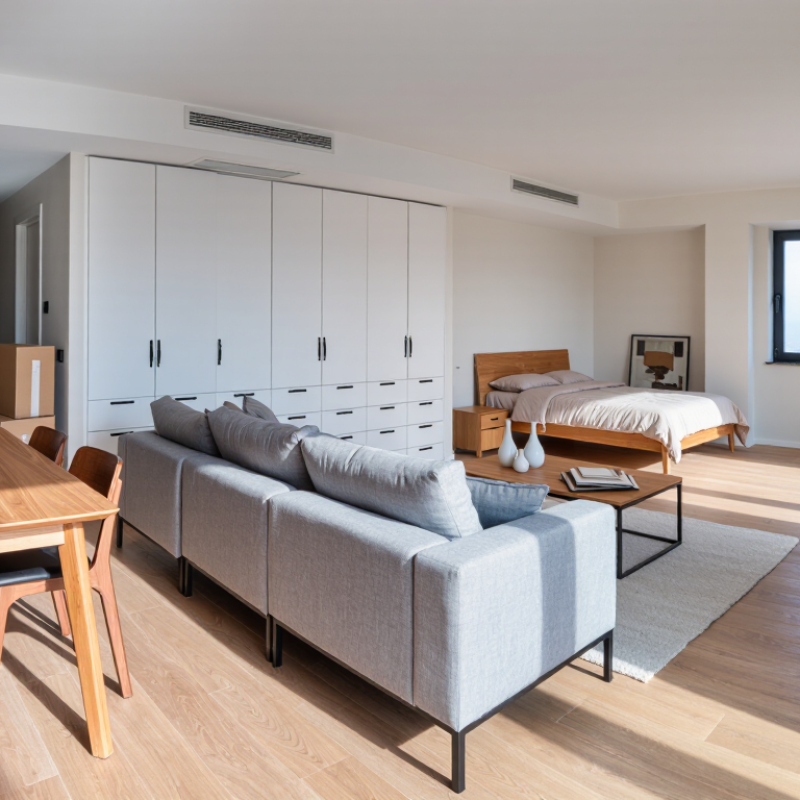
China’s apartment furniture manufacturing landscape is broad, layered, and highly adaptable. Major production regions combine woodworking, metal fabrication, upholstery, and packaging within practical shipping networks. This structure helps global buyers source complete room packages from one market.
Experienced suppliers often separate residential, serviced-apartment, and rental-project production lines. Their capabilities may include compact wardrobes, lift-up beds, nesting tables, and moisture-resistant kitchen units.
Factory visits reveal details that catalogs often hide. Check panel edges, drawer alignment, hardware strength, and carton protection. Small defects become expensive after installation.
Reliable procurement depends on documented specifications. Ask for material grades, emission test reports, fire-performance evidence, and inspection records. Requirements vary by destination, so local regulations must guide approvals.
The landscape is not perfectly smooth.
Custom colors can disrupt standard production schedules. Low prices may conceal thinner boards, weaker fittings, or limited after-sales support.
I have found that detailed checklists outperform attractive showroom displays. Buyers should compare total landed cost, not only factory pricing.
Container loading photos, third-party inspections, and batch records add useful accountability. Even skilled teams make mistakes; transparent correction is more valuable than confident promises.

Global apartment projects need coordinated furniture, not isolated pieces. Experienced buyers usually divide orders into practical product categories. This method clarifies specifications, budgets, packaging, and installation responsibilities. Good suppliers should provide drawings, material samples, test documents, and stable production schedules. Ask for a pre-production sample. Small errors matter.
Bedroom furniture often includes beds, wardrobes, nightstands, desks, and mattresses. Check panel thickness, edge sealing, hardware cycles, and wardrobe ventilation.
Living areas require sofas, coffee tables, media units, and occasional chairs. Confirm fabric performance, foam density, frame strength, and cleanability.
Dining packages may combine tables, chairs, bar stools, and compact storage. Measure circulation space carefully, especially in serviced apartments.
Kitchen and bathroom storage need moisture-resistant construction, precise hinges, and easy-to-replace parts. Entryway cabinets, curtains, lighting coordination, and movable partitions can complete the package. For larger developments, suppliers should manage room sets, carton labels, spare parts, and installation guides.
Request inspection records before shipment. Local fire, safety, chemical, and accessibility rules still require independent verification. A supplier may offer attractive finishes but overlook repair access. That weakness deserves discussion before approval. No catalog is perfect. Review mock-up rooms with installers, because beautiful designs can fail during daily cleaning or rushed handover.
Choosing Chinese apartment furniture suppliers requires more than comparing catalog prices. A polished website proves little. Factory visits, video audits, and sample reviews reveal differences in joinery, packaging, and production discipline. Ask for a current business license, export records, quality certificates, and the actual production address. These documents should match the legal selling entity. A small mismatch can signal a serious risk.
Request one full-size sample before approving a large order. Check panel thickness, edge sealing, hardware strength, and surface consistency. Open drawers repeatedly. Test hinges and inspect hidden joints. Measure the packed carton, not only the assembled cabinet. This helps verify shipping calculations and installation plans. Photos can mislead.
Reliable suppliers explain lead times, minimum order quantities, replacement policies, and inspection procedures in writing. Ask whether materials meet the safety requirements of your destination market. An independent pre-shipment inspection can check quantities, dimensions, finishes, and packaging. Do not rely only on factory photographs. During one evaluation, a low quote looked attractive until missing hardware and weak cartons increased the real cost. That mistake remains worth remembering. Compare total delivered cost, communication speed, corrective action, and production capacity. A supplier who admits a production problem may be more dependable than one promising perfection.
China Top Apartment Furniture Suppliers for Global Buyers
Reliable apartment furniture sourcing begins with export discipline. Suppliers should understand the destination market, not only the factory schedule. In practical sourcing work, I check material declarations, product labels, packing marks, and shipping documents before production. Fire safety, formaldehyde limits, electrical requirements, and wood-packaging rules may differ by country. Details matter. A wardrobe panel should match approved drawings within an agreed tolerance. Cartons need corner protection, moisture barriers, and clear installation instructions. Drop testing can reveal weak joints before containers leave the factory. However, no inspection system is flawless. A rushed loading check may miss a scratched table edge or mixed hardware bag.
Customization requires controlled communication. Buyers should provide room dimensions, preferred finishes, usage scenarios, and target quantities. Suppliers can then prepare CAD drawings, finish samples, prototypes, and a written specification sheet. Each change should receive approval before mass production. Quality control works best at several points: incoming material inspection, production checks, pre-shipment inspection, and container loading. Inspectors may measure panel thickness, test drawer movement, check welds, and compare colors under consistent lighting. Photographs and inspection records improve accountability. Still, color variation can occur between batches. This risk should be discussed honestly, with an acceptable range confirmed in writing. A dependable supplier does not promise perfection. It explains limitations, documents decisions, and corrects recurring defects through measurable action.
Export Standards, Customization, and Quality Control
This normalized 0–100 evaluation framework reflects the main criteria commonly used by international buyers when assessing apartment furniture suppliers. Export compliance covers documentation and market requirements, customization covers design and production flexibility, and quality control covers inspection, material consistency, and testing procedures.
China offers broad apartment furniture capacity, but purchasing should begin with measurable specifications. Define dimensions, load limits, surface finishes, fabric composition, and carton sizes before requesting quotations. A pre-production sample can expose unstable joints or mismatched colors. Small details matter.
The World Bank’s 2023 Logistics Performance Index used 4,090 survey responses across 139 economies. Its findings reinforce the value of tracking, customs readiness, and delivery consistency. Ask suppliers for production lead times, export documents, packaging photos, and inspection records. Compare landed cost, not only factory price. Include spare panels, fittings, and a clear defect procedure. A low price can become expensive after rework.
Shipping plans need practical discipline. UNCTAD states that maritime transport carries over 80% of global trade by volume. For apartment projects, confirm the loading port, container utilization, shipping terms, cargo insurance, and destination handling fees. Test cartons with corner protection and moisture barriers, especially for long sea routes. I would also request a realistic delivery buffer. Perfect forecasts are rare. That is uncomfortable, but honest planning protects installation schedules. A shared monthly forecast can improve capacity decisions, while quarterly performance reviews should examine damage rates, response time, and corrective actions. A supplier partnership should survive one difficult shipment, not only a successful sample.

Signup our newsletter to get update information, promotion or insight.