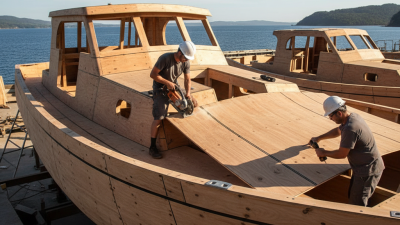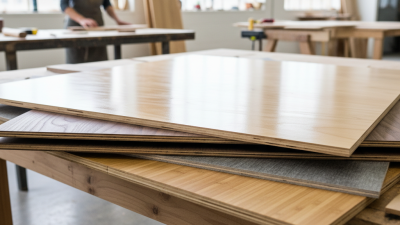
Choosing marine plywood sheets is not simply a matter of finding the thickest panel. Moisture exposure, construction quality, certification, and installation conditions all affect performance. A sheet used beneath a constantly wet deck faces different demands from one installed inside a protected cabin.
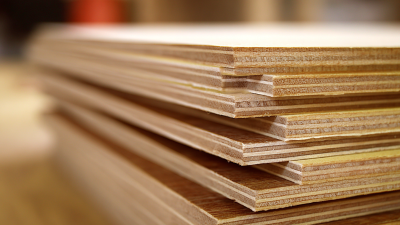
Dr. Mark Knaebe, a wood durability specialist at the USDA Forest Products Laboratory, has emphasized, “Coatings are not a substitute for good design.” That principle remains practical. A strong coating cannot repair open veneer gaps, weak glue lines, or unsealed edges. Look closely at the panel surface. The face should appear consistent, without large patches, deep splits, or visible voids. Inspect the edges too. Small defects can become serious water entry points.
This guide presents seven practical tips for choosing marine plywood sheets. It considers veneer quality, adhesive performance, thickness, core construction, certification, storage, and edge protection. Standards such as BS 1088 may provide useful guidance, but labels can vary between suppliers and countries. Always review the manufacturer’s documentation. Do not rely on the word “marine” alone.
The details matter.
A panel may look perfect in a warehouse, then swell after one careless cut. Another sheet may cost more but reduce repairs over years. Still, no selection is flawless. Even certified plywood needs careful sealing, correct fasteners, and thoughtful drainage. The best decision balances technical evidence with the actual project environment, rather than trusting appearance or advertising.
7 Tips for Choosing Marine Plywood Sheets
Define Marine-Plywood Needs by Load, Moisture, and Exposure Class
Marine plywood should match the job, not just the word “marine” on the label. Start with load, span, support spacing, and fastening points. A deck panel carrying people needs different stiffness from a light cabinet door. Check thickness, veneer quality, and the manufacturer’s structural data before cutting. Tip: Sketch the load path first. It exposes weak supports quickly.
Moisture changes the decision. Identify whether the sheet faces occasional splashes, repeated wetting, or constant humidity. Sealed edges and properly fitted joints matter as much as the panel surface. Use compatible coatings and leave drainage paths beneath exposed panels. I have seen well-coated sheets fail because water stayed trapped around screws. Tip: Inspect edges before installation. They often reveal poor preparation.
Exposure class deserves careful attention. Sheltered outdoor use, covered construction, and prolonged weathering are not identical conditions. Adhesive durability, veneer defects, and surface protection should suit the expected environment. A sheet rated for exterior exposure may still be unsuitable for permanent immersion. Confirm technical documents, then compare them with local climate and maintenance access. I sometimes underestimate future repairs; a difficult-to-reach panel deserves more protection. When loads are structural or unusual, ask a qualified engineer to verify the design. Small assumptions can become expensive failures.
Define marine-plywood needs by load, moisture, and exposure class.
The chart shows common nominal plywood thicknesses and their approximate mass per square metre, calculated at a representative density of 600 kg/m³. Actual mass depends on wood species, adhesive content, moisture, and manufacturing tolerance. Thickness alone does not establish structural load capacity.
Check span, support spacing, concentrated loads, impact, and fastening before selecting thickness.
Choose panels rated for the intended environment rather than relying only on the word “marine.”
Dry, humid, and exterior service conditions require different panel performance and protection.
Exterior-grade waterproof bonding is important where repeated wetting or high humidity is expected.
Thicker sheets generally weigh more and may improve stiffness, but structural calculations are still required.
Seal cut edges, prevent standing water, and provide drainage because even durable plywood can absorb moisture.
Review the technical datasheet for species, veneer construction, thickness tolerance, bending strength, and durability claims.
In Eurocode-based wood design, service environments are commonly grouped as Class 1 up to approximately 65% relative humidity, Class 2 from approximately 65% to 85%, and Class 3 above approximately 85% or where weather exposure occurs. Use the panel standard and project specification applicable to your region.
Marine plywood should withstand moisture, but the label alone proves very little. Ask for documentation confirming EN 636-3 exterior use and EN 314-2 Class 3 bonding. These standards address different needs. EN 636-3 relates to plywood performance in exterior conditions. EN 314-2 Class 3 confirms adhesive durability under severe moisture exposure. Check the product declaration, test reports, and batch details. Missing paperwork is a warning sign.
Tip 1: Inspect the edges closely. Good sheets show tight veneer joints, consistent layers, and no open gaps.
Tip 2: Look for swelling, dark glue lines, or lifting veneers. These defects may become serious after repeated wetting.
Tip 3: Compare the paperwork with the actual sheet thickness and construction.
I once focused too much on a smooth face and overlooked uneven core veneers. That was a useful mistake.
Ask how the panels are pressed, stored, and protected before delivery. Even correctly bonded plywood can suffer from poor handling.
Standards do not replace careful workmanship. A certificate helps, but it is not the whole inspection.
BS 1088 compliance should be your first filter, not a decorative stamp. The standard covers veneer quality, bonding, and manufacturing consistency for marine applications. Ask for the certificate and confirm its scope. A sales sheet alone is weak evidence. The UK Timber Trade Federation’s marine plywood guidance also stresses traceable documentation and visible quality checks.
Inspect the sheet edge closely. Good plywood shows tightly fitted veneers, even thickness, and no open core gaps. Hold it against light. Voids may appear as dark channels. They can collect water and reduce fastener grip. BS 1088 also expects suitable face veneers, limited defects, and durable bonding. Do not judge quality by a smooth surface only.
USDA Forest Products Laboratory research, published in the Wood Handbook, reports that moisture changes can reduce wood performance and cause dimensional movement. Storage matters too. Keep sheets flat, raised above concrete, and covered from rain.
I have seen expensive sheets fail at the edge.
Check thickness with a caliper at several points. Compare the readings with the declared size. Tap the panel lightly; hollow sounds deserve investigation. Ask for bond-test results, veneer species, and production batch details. The FAO Global Forest Resources Assessment 2020 confirms that responsible forest management and traceability remain important across wood supply chains. Still, certification does not replace inspection. A compliant sheet can be poorly stored, damaged, or unsuitable for a particular design. That is the part buyers often overlook.
7 Tips for Choosing Marine Plywood Sheets
Compare Panel Thickness, Species, Density, and Structural Stiffness
Marine plywood should be selected for its internal structure, not its smooth surface. Start with panel thickness, because a thin sheet can flex under repeated loading. For shelving, decks, or hull components, compare the expected span and load with the manufacturer’s technical data. More thickness is not always better. Weight and fitting problems can increase quickly.
Species affects durability, machining, and stiffness. Dense hardwood veneers usually resist dents, while lighter species can reduce overall weight. Check the veneer arrangement and core quality, not just the outer face. A void-free core supports fasteners and limits weak spots. Density offers useful guidance, but it should not replace measured bending performance. Look for published modulus and strength values when the panel carries structural loads. Stiffness matters most where deflection could damage joints or finishes.
Moisture resistance depends on both the adhesive and the wood layers. Confirm that the panel is made for prolonged damp conditions, then protect cut edges during installation. I once focused too heavily on thickness and overlooked a soft core; the panel sagged sooner than expected. That mistake still influences my inspections. Tap the sheet, examine exposed edges, and reject panels with gaps or uneven laminations. Store them flat, dry, and supported. A careful comparison of seven details—thickness, species, density, core, stiffness, bonding, and edge protection—usually reveals more than a product label.
| Tip | Selection Factor | Typical Options | Typical Density | Typical MOE* | Best Use Guidance |
|---|---|---|---|---|---|
| 1 | Match thickness to span and load | 6, 9, 12, 15, 18, 25 mm | Approximately 400–750 kg/m³, depending on species | Approximately 6–14 GPa | Use thinner sheets for lightweight panels and closely spaced supports; use thicker sheets for decks, bulkheads, floors, and longer spans. |
| 2 | Compare wood species | Okoume, meranti, sapele, or other marine-grade hardwoods | Okoume: about 380–500 kg/m³ Meranti: about 500–650 kg/m³ Sapele: about 600–750 kg/m³ |
Typically increases with density; verify the supplier's test data | Choose lower-density species where weight matters and denser species where abrasion resistance and stiffness are more important. |
| 3 | Evaluate structural stiffness | Check modulus of elasticity parallel and perpendicular to the face grain | Higher density generally provides greater stiffness, but construction quality also matters | Typical plywood MOE: approximately 6–14 GPa | For load-bearing applications, use declared design values rather than relying only on species or nominal thickness. |
| 4 | Confirm veneer construction | Balanced cross-laminated veneers; commonly 5, 7, or more plies | More plies may improve dimensional stability and screw-holding performance | Depends on veneer quality, grain orientation, adhesive bond, and lay-up | Look for void-free or low-void cores, consistent veneer thickness, and a balanced lay-up suitable for the intended structural direction. |
| 5 | Check water-resistance requirements | Exterior or marine adhesive; permanent immersion requires project-specific approval | Density does not determine water resistance | Wet-condition stiffness can be lower than dry-condition stiffness | Verify adhesive class, certification, and durability rating; seal all cut edges, holes, and fastener penetrations. |
| 6 | Consider weight and handling | Approximate sheet weights vary with thickness and density | At 12 mm thickness: about 4.8–9.0 kg/m² | A thicker panel is usually stiffer but also heavier | For boats, trailers, and portable structures, compare weight per square metre with the required stiffness and strength. |
| 7 | Verify standards and documentation | Applicable marine, structural, or exterior plywood standard; mill certificate and test report | Use documented minimum or declared values instead of general averages | Confirm bending strength, MOE, shear strength, and thickness tolerance | For structural work, select panels with traceable grading, suitable exposure classification, and values accepted by the project engineer or building code. |
7 Tips for Choosing Marine Plywood Sheets
A marine plywood sheet should be judged by more than its smooth surface. Check its formaldehyde emission result and request evidence for an E1 classification at or below 0.124 mg/m³. This limit is commonly assessed through controlled chamber testing. Ask which test method was used, because figures from different methods may not be directly comparable. Small details matter.
Look for a certificate linked to the actual manufacturer, production site, and product thickness. The document should show the testing laboratory, report date, standard, and sample description. Traceability should continue from the batch number to the delivery record. A certificate with no batch reference is weaker evidence. It may still look official, but verification becomes difficult.
During inspection, compare the paperwork with the sheet markings and packaging labels. Check whether the certificate covers the adhesive system, not only the finished panel. Moisture-resistant performance also depends on veneer quality, bonding, and edge sealing. E1 does not automatically prove long-term outdoor durability. That distinction is often missed.
I would also keep a retained sample and photograph its labels before installation. This creates a simple record if questions arise later. Do not rely on a seller’s verbal promise. Request the original report and confirm its details independently. In practice, paperwork can be incomplete, and even careful buyers may overlook an expired test report. Recheck it.

Signup our newsletter to get update information, promotion or insight.