
Choosing a Power Recliner Chair in 2026 requires more than comparing colors, prices, and discount labels. The right chair should support your body, room, daily habits, and long-term comfort. A showroom test helps, but it cannot replace careful measurements at home.
Industry data explains why this decision matters. The United Nations World Population Prospects 2024 projects that one in six people worldwide will be aged 65 or older by 2050. This shift increases demand for supportive, accessible seating. Grand View Research also identifies rising home-comfort spending and aging consumer needs as important drivers in the global recliner market. These reports show opportunity, not a guarantee of quality. Marketing claims still require scrutiny.
A reliable Power Recliner Chair should provide smooth movement, stable armrests, breathable upholstery, and practical controls. Measure the wall clearance first. Then check whether your feet rest naturally on the floor when seated. A narrow chair may look elegant but feel restrictive after an hour. A soft cushion may also compress too quickly. Small details matter, such as USB placement, motor noise, emergency battery backup, and cleaning instructions. Look for recognized safety certifications where available, and confirm the warranty in writing. Some products advertise “zero gravity” comfort without explaining the actual angle or support system. That deserves a closer question. This guide compares those features through a practical, evidence-informed lens. It also acknowledges an uncomfortable truth: the most expensive chair is not always the best fit.
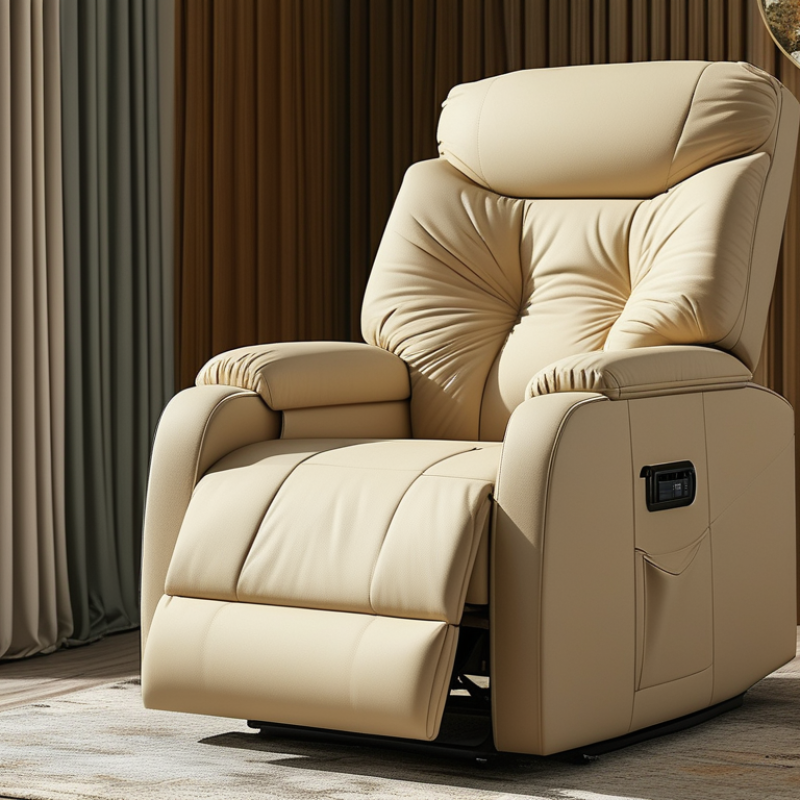
How to Choose a Power Recliner Chair in 2026?
Measure Your Room and Body Fit: Target 18–21-Inch Seat Height
A power recliner should fit your body before it fits your décor. Measure from the floor to the back of your knee while wearing everyday shoes. For many adults, an 18–21-inch seat height supports easier sitting and standing. Your feet should rest flat, not dangle. Your knees should stay close to a right angle. Small differences matter.
Measure the seat width between the arms, not the outside frame. Leave enough space for your hips and winter clothing without forcing your shoulders outward. Then check seat depth. Sit fully back and keep two or three fingers between the seat edge and your knees. Too much depth can strain your lower back. A removable cushion may change this measurement over time.
Room measurements matter just as much. Record the chair’s full reclined length and allow clear space for the footrest. Check nearby tables, walkways, and wall outlets. A wall-hugging design still needs operating clearance. I once underestimated a doorway by less than an inch. The chair arrived, but moving it inside became difficult. That mistake was avoidable.
Test the control location with your arm resting naturally. The buttons should be visible and easy to press. If possible, sit for at least ten minutes. Notice pressure behind your knees, hip movement, and lower-back support. Comfort can feel impressive for two minutes, then reveal problems later. Your measurements are more trustworthy than a showroom impression.

Recline angle should guide your decision before fabric or motor speed. A 110° back angle keeps the torso fairly upright for reading and conversation. Around 120° offers a calmer posture for television. Near 130° feels more open, especially when the headrest supports the neck.
NASA-STD-3001 describes a neutral body posture near 128°, measured between the torso and thighs. It does not represent the chair-back angle directly. This distinction matters. A 2021 review in Applied Ergonomics also linked supported reclining with lower spinal loading, but results varied by posture and user.
Test the chair with both feet supported. At 110°, check whether your chin drops toward your chest. At 130°, check whether your head floats without the headrest.
Zero-gravity mode usually lifts the legs and reclines the back together. It can spread pressure across the seat and reduce the heavy feeling in your heels. It is not actual weightlessness. Treat it as a coordinated posture preset.
The imperfect part is personal fit. A mode that feels excellent for ten minutes may strain your knees later. Sit for at least fifteen minutes, change positions, and notice pressure near the tailbone, calves, and shoulders.
Also confirm how the manufacturer measures its angle. Some labels describe the back panel; others describe the torso-to-thigh relationship. That inconsistency can make two similar chairs appear very different.
When choosing a power recliner in 2026, I check safety documentation before upholstery, massage modes, or cup holders. UL 962 is an important reference for powered household and commercial furnishings. However, a printed UL mark alone deserves closer inspection. Confirm that the certification applies to the complete recliner or its installed electrical system. Ask for a listing number, test details, and a current instruction manual.
The load rating matters every time someone sits down, rises, or leans sideways. A 300-pound capacity should comfortably exceed the user’s body weight, not merely match it. Reclining creates shifting forces, especially when the footrest opens or the chair moves near a wall. I also inspect the base, frame joints, actuator area, and power cord for exposed gaps or weak-looking connections. Small pinch points can become serious during daily use.
Read the warranty and maintenance guidance carefully. Reliable documentation should explain cleaning, electrical care, weight limits, and what happens during a power interruption. A battery backup or manual release may be useful, but neither replaces proper testing. I once focused too much on a chair’s smooth motion and overlooked how tightly the footrest closed. That mistake changed my checklist. Measure the room, keep cords away from walkways, and leave enough clearance for full recline. Even certified equipment still needs sensible installation and regular inspection.
How to Choose a Power Recliner Chair in 2026?
The motor system determines how naturally a power recliner supports your body. A single motor usually moves the backrest and footrest together. It offers simple operation, fewer controls, and often a lower purchase cost. This setup works well for reading, watching television, or taking short rests. However, your legs and back cannot move independently. Check the movement range before buying. Some single-motor chairs recline farther than expected, while others feel limited.
Dual motors control the backrest and footrest separately. You can raise your legs while keeping your back slightly upright. This adjustment helps users who read, work, or experience swelling after long periods of sitting. Test both controls slowly. Listen for grinding sounds, uneven movement, or hesitation. A quiet motor is useful in bedrooms and shared living spaces. Weight capacity, emergency battery access, and warranty terms also deserve attention. I once focused too much on smooth movement and overlooked the chair’s narrow seat. That mistake changed my buying checklist.
Tips: Sit in the chair for at least ten minutes. Keep both feet supported. Try every position you may use daily. Ask whether replacement parts remain available. Dual motors add convenience, but they also add mechanical complexity. More adjustment is not always better. Consider your routine, room size, and maintenance comfort before choosing.
Single-motor and dual-motor systems compared by their core adjustment capabilities
A single-motor recliner normally links the backrest and footrest to one movement system, so both sections move together. A dual-motor recliner uses separate motors and control channels, allowing the backrest and footrest to be adjusted independently. The values show the functional difference between the two common mechanisms; actual chair designs may vary.
When choosing a power recliner in 2026, treat warranty language as engineering evidence, not decoration. A five-year frame warranty sounds strong, but the motor, controller, foam, and fabric may receive shorter coverage. Read the schedule carefully. Look for separate coverage periods and clear repair responsibilities. A reliable policy states who pays labor, replacement shipping, and technician visits. Fine print matters.
In my evaluation process, I run the chair through repeated open-and-close cycles, simulating daily use over several years. I listen for clicking, uneven movement, heat, and hesitation near full extension. A serious cycle test should record load, speed, noise, and failure points. Ask whether testing used an occupied chair, not an empty showroom sample. That detail can change the result.
Durability also depends on joints, cable routing, battery connections, and upholstery seams. Check that the frame feels stable when rising, without twisting or sudden jolts. Warranty claims may exclude stains, power surges, misuse, or normal cushion compression. Those exclusions may be reasonable, but vague wording deserves caution. I would keep photos, receipts, and service contacts. My judgment is not perfect; comfort can hide mechanical weakness during a short trial. Test it repeatedly, and leave room for uncertainty.
| Evaluation Dimension | Review Benchmark | What the Warranty or Test Should Cover | Evidence to Request | Suggested Score | Buying Interpretation |
|---|---|---|---|---|---|
| Overall warranty period | 1 year | Complete chair, electrical parts, motor, frame, and labor are covered for at least 12 months. | Written warranty document showing the start date, covered components, exclusions, and claim process. | 1 / 5 | Basic protection; inspect the chair carefully before the warranty expires. |
| Overall warranty period | 2 years | Complete product coverage continues for 24 months, preferably including the power system and labor. | Separate terms for the frame, mechanism, motor, controller, upholstery, and labor charges. | 2 / 5 | Acceptable for occasional use when the terms are clear. |
| Overall warranty period | 3 years | At least three years of protection for major structural and powered components. | Confirmation that parts availability and technical support continue throughout the coverage period. | 3 / 5 | A balanced minimum for regular household use. |
| Overall warranty period | 4 years | Four-year coverage for the frame, reclining mechanism, motor, and control system, with clearly stated labor terms. | Full warranty schedule and details about shipping, service visits, and replacement parts. | 4 / 5 | Strong protection, provided exclusions are not excessive. |
| Overall warranty period | 5 years | Five-year coverage for core structural and powered components; upholstery may have different terms. | Written confirmation of whether the warranty is full or prorated and whether labor remains covered for five years. | 5 / 5 | Best warranty category for long-term ownership. |
| Frame durability | Steel or reinforced hardwood frame with no visible movement, cracking, or joint separation. | Frame coverage should be stated separately; a long frame warranty does not automatically cover the motor or upholstery. | Frame material specification, joint construction details, and warranty coverage for structural failure. | 5 / 5 | Prioritize stable joints, supported load capacity, and a non-warped frame. |
| Reclining mechanism | At least 10,000 controlled open-and-close cycles for basic screening; 20,000 or more is a stronger result. | The test should include the complete mechanism under a stated load, not only an unloaded motor. | Test report identifying cycle count, applied load, test angle, failure criteria, and sample condition after testing. | 3–5 / 5 | Higher cycle counts generally indicate better mechanical endurance, but test conditions matter. |
| Power motor and actuator | At least 10,000 operating cycles; 20,000–30,000 cycles provides stronger evidence when independently tested. | Testing should cover repeated extension and retraction, abnormal noise, overheating, loss of travel, and stall behavior. | Motor model information, duty-cycle limits, thermal protection details, and an independent test record. | 3–5 / 5 | Do not rely on a long frame warranty if the motor warranty is only one year. |
| Control switch and hand control | At least 10,000 button operations for basic durability screening. | Buttons, cable connections, USB or charging ports, and emergency return functions should be checked separately. | Control-cycle test results, replacement-controller availability, and cable repair policy. | 3 / 5 | A replaceable controller can reduce repair cost after the main warranty ends. |
| Load and stability | Verify the published maximum user weight and test the chair at or above that limit without instability. | The warranty should not exclude normal use below the stated load capacity. | Rated load, seat-width measurement, center-of-gravity guidance, and stability-test information. | 4 / 5 | Choose a safety margin rather than operating continuously at the maximum rating. |
| Power interruption behavior | Battery backup or manual emergency return is preferred; backup capacity should be clearly stated. | Coverage should specify whether power-surge damage, battery failure, and adapter replacement are included. | Battery type, expected backup operations, adapter rating, surge guidance, and emergency-use instructions. | 3 / 5 | Important for users who need reliable positioning during a power outage. |
| Upholstery and cushion retention | Check seam quality, abrasion resistance, foam recovery, and compression after repeated use. | Fabric, synthetic leather, genuine leather, foam, and stitching often have shorter or separate warranty periods. | Upholstery care instructions, abrasion-test result if available, cushion-density information, and exclusions for wear. | 3 / 5 | Wear, fading, stains, and normal compression are commonly excluded from warranty claims. |
| Serviceability and parts support | Replacement motor, controller, transformer, cable, and hardware should be available after purchase. | Warranty value is reduced if the product must be returned internationally or if labor and shipping are excluded. | Parts list, service-center location, estimated repair time, shipping responsibility, and post-warranty support policy. | 4 / 5 | Local parts and repair support can matter more than an extra year of limited coverage. |
| Warranty exclusions | Use, misuse, moisture, unauthorized repairs, voltage damage, commercial use, and normal wear should be clearly defined. | Look for prorated reimbursement, inspection fees, return freight, and labor exclusions. | Complete terms and conditions rather than a short marketing summary. | 4 / 5 | A shorter but comprehensive warranty may be more valuable than a longer limited warranty. |
| Documentation quality | Specifications, safety instructions, maintenance requirements, and test methods should be easy to verify. | Claims should identify measurable limits rather than using only terms such as “heavy duty” or “long lasting.” | Owner’s manual, technical specification sheet, test certificate, warranty booklet, and serial-number procedure. | 5 / 5 | Clear documentation is a strong indicator of transparent after-sales support. |

Signup our newsletter to get update information, promotion or insight.